Sammying in Leather Production: A Complete 2026 Guide
Leather manufacturing involves a series of precise, highly controlled processes that determine the quality, durability, and appearance of the final product. One of the most important yet often overlooked stages is sammying. This process plays a crucial role in preparing leather for drying, finishing, and shaping while directly influencing consistency and performance.
This in-depth guide explains sammying in clear, practical terms. Whether you are a leather professional, student, or enthusiast, you’ll gain a complete understanding of how it works, why it matters, and how modern technology is reshaping this essential step.
What Is Sammying?
Sammying is a mechanical operation carried out after the tanning and washing stages of leather production. At this point, hides contain a large amount of water, making them heavy, unstable, and unsuitable for further processing. The purpose of sammying is to partially remove excess moisture while compressing and leveling the leather structure.
Rather than fully drying the hide, this process brings moisture down to a controlled level that keeps the leather flexible and workable. This balance is essential for achieving uniform thickness, surface smoothness, and fiber strength in later stages.
Why Sammying Is Essential in Leather Manufacturing
Sammying is not simply about water removal. It directly affects the physical structure and processing efficiency of leather.
Moisture Regulation
Leather leaving wet processes contains uneven moisture distribution. Sammying reduces this moisture to a consistent level across the hide, preventing defects during drying and finishing.
Structural Stability
Controlled compression tightens collagen fibers, improving dimensional stability. This helps the leather maintain its shape during cutting, shaving, and finishing.
Process Efficiency
By removing water mechanically, the energy required for drying is significantly reduced. This lowers production costs and shortens processing time.
Surface Improvement
Flattening during sammying reduces wrinkles and distortions, resulting in a smoother and more uniform surface.
The Sammying Process Explained Step by Step
Understanding the workflow behind sammying helps clarify its importance in the production line.
Pre-Processing Preparation
After tanning and rinsing, hides are inspected and cleaned to ensure even moisture distribution. Any surface contaminants are removed before pressing.
Feeding and Alignment
Hides are carefully aligned before entering the machine. Proper positioning ensures even pressure and consistent results.
Mechanical Pressing
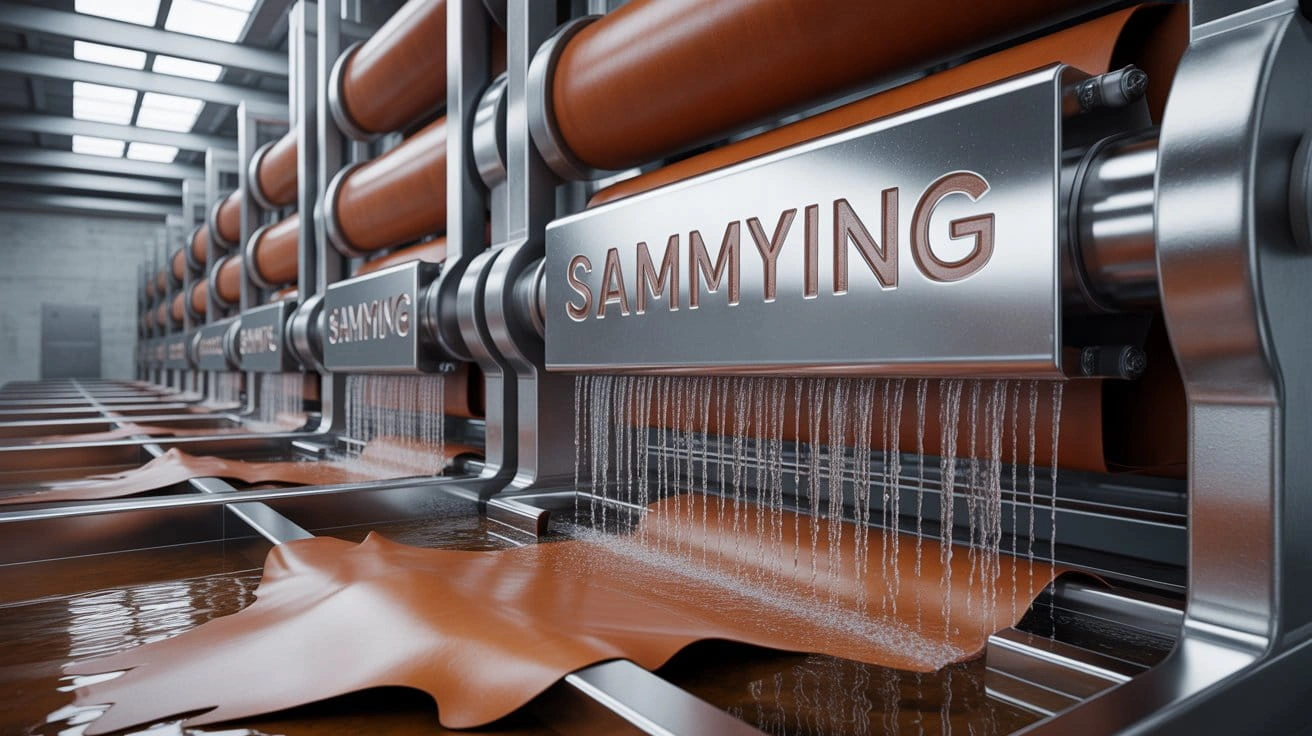
Hydraulic or pneumatic pressure is applied through rollers or flat plates. This pressure expels excess water while compressing the leather uniformly.
Moisture Absorption
Special absorbent materials assist in drawing water away from the hide. These materials must be well maintained to ensure efficiency.
Monitoring and Control
Modern systems monitor thickness and moisture levels in real time, adjusting pressure automatically for optimal output.
Post-Processing Inspection
Once complete, leather is checked for uniform moisture, smoothness, and readiness for the next production stage.
Equipment Used for Sammying
Several types of machines are used depending on production scale and leather type:
Hydraulic press machines are commonly used for thicker hides and batch processing. Pneumatic systems offer faster cycles and flexible pressure control. Continuous roller machines are preferred in high-volume facilities due to their speed and consistency. Advanced digital controls allow operators to fine-tune pressure, speed, and moisture targets with high accuracy.
Benefits of Sammying
Consistent Leather Quality
Uniform moisture and thickness lead to predictable results in downstream processes.
Reduced Energy Consumption
Mechanical water removal lowers the need for prolonged drying, saving energy.
Improved Productivity
Faster drying and fewer defects increase overall production efficiency.
Enhanced Finishing Results
Leather treated correctly during sammying absorbs dyes and finishes more evenly.
Challenges and Limitations
Despite its advantages, sammying requires careful control.
Over-pressing can damage fiber structure, leading to weak or brittle leather. Uneven pressure distribution may cause moisture inconsistencies. Equipment maintenance is critical, as worn components reduce efficiency. Older systems may also consume more energy than modern alternatives.
Modern Innovations and Industry Trends
The leather industry continues to refine sammying through technology and sustainability initiatives.
Automation now allows machines to adjust pressure dynamically based on hide characteristics. Sensor-based systems reduce waste and improve consistency. Energy-efficient designs help lower environmental impact. Integrated machines combine sammying with other preparation steps, reducing handling and labor.
These advancements reflect a broader industry shift toward precision manufacturing and sustainable production.
Real-World Applications of Sammying
Medium-Scale Tannery Example
A regional tannery upgraded its sammying equipment to include moisture sensors and improved absorbent materials. The result was faster drying times, lower energy use, and a noticeable improvement in surface consistency.
Large Industrial Facility
A high-output leather plant implemented automated continuous systems. This reduced material waste, improved uniformity across batches, and allowed for smoother integration with automated finishing lines.
FAQ’s
What is the purpose of sammying in leather processing?
It removes excess water and stabilizes the leather structure before drying and finishing.
Is sammying the same as drying?
No. Sammying only partially removes moisture, while drying removes most remaining water.
What types of leather require sammying?
Most tanned hides, including bovine, sheep, and goat leather, undergo this process.
Can poor sammying affect final leather quality?
Yes. Inconsistent pressure or moisture control can lead to defects and reduced durability.
Final Thoughts
Sammying is a critical yet often underestimated step in leather production. By controlling moisture, strengthening fiber structure, and improving surface uniformity, it sets the foundation for high-quality finished leather. As technology evolves, this process continues to become more precise, efficient, and environmentally responsible.
For anyone involved in leather manufacturing or studying material processing, understanding sammying provides valuable insight into how premium leather products achieve their performance and appearance.