Class K Fire Extinguisher: Complete Guide for Commercial Kitchens
Fire safety in kitchens is not optional. It is a daily operational responsibility. Among all fire safety tools, one device is specifically designed for the most dangerous kitchen fires involving cooking oils and fats. This article provides a complete, experience-backed, and practical explanation of the class k fire extinguisher, written for business owners, kitchen managers, safety officers, and anyone responsible for food preparation environments.
This guide goes far beyond basic definitions. It explains how these extinguishers work, where they fail, when they are legally required, and how real kitchens use them effectively. The goal is to help you make informed, safety-first decisions without confusion or marketing fluff.
What Is a Class K Fire Extinguisher?
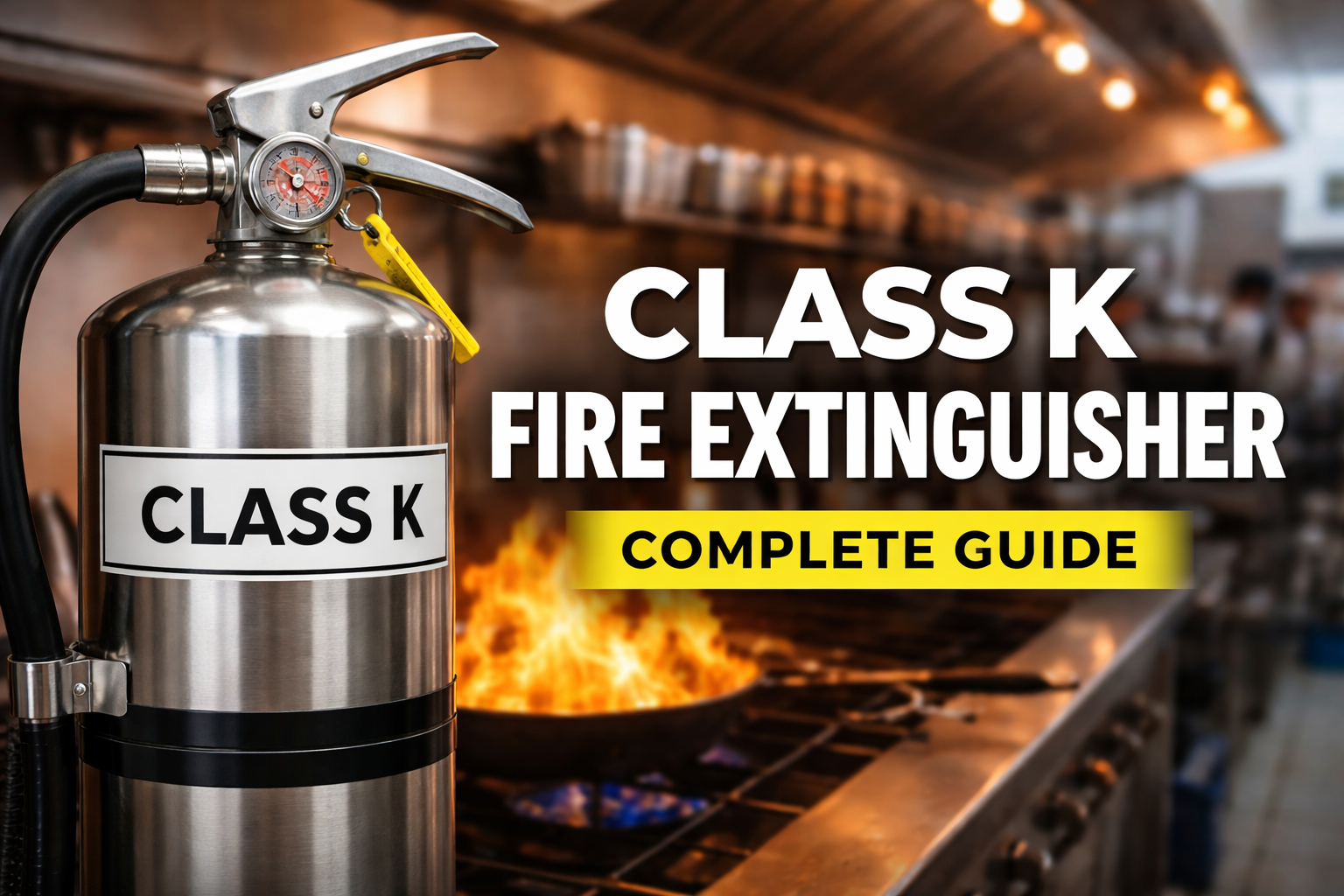
A class k fire extinguisher is a specialized fire suppression device designed exclusively for fires caused by cooking oils, fats, and grease. These fires are common in commercial kitchens and are extremely dangerous due to high ignition temperatures and rapid flame spread.
Traditional extinguishers are ineffective or unsafe for these fires. Water can cause violent flare ups. Dry chemical agents may spread burning oil. This extinguisher uses a wet chemical agent that reacts with hot oils to stop the fire safely.
Why Class K Fires Are Different
Cooking oil fires burn hotter than most people realize. Vegetable oils can exceed 700 degrees Fahrenheit before igniting. Once burning, they retain heat even after flames appear extinguished.
Key characteristics include:
- High auto ignition temperature
- Deep heat retention
- Rapid re ignition risk
- Explosive reaction with water
This is why standard extinguishers fail in kitchen environments.
How a Class K Fire Extinguisher Works
The extinguisher releases a fine mist of wet chemical solution. This solution performs two critical actions at the same time.
First, it cools the surface of the burning oil. Second, it triggers a chemical reaction called saponification. This reaction converts hot grease into a soap like foam that seals the surface and prevents oxygen from reaching the fuel.
This dual action is what makes this extinguisher effective where others fail.
The Science Behind Saponification
Saponification is the same process used to make soap. When the wet chemical contacts hot fat, it forms a thick, non flammable layer. This layer:
- Smothers flames
- Prevents splashing
- Blocks oxygen
- Reduces re ignition risk
In real kitchens, this foam layer remains stable long enough for temperatures to drop below ignition levels.
Where Class K Fire Extinguishers Are Required
In most regions, fire codes require these extinguishers in commercial kitchens. This includes any operation that uses deep fryers, flat grills, or cooking oils in large quantities.
Common environments include:
- Restaurants
- Hotel kitchens
- Catering facilities
- School cafeterias
- Hospital food services
- Food trucks
- Commercial bakeries
Residential kitchens do not usually require them, but some high end or shared facilities choose to install them for added safety.
Legal and Code Compliance Overview
While regulations vary by region, most fire safety standards align on core requirements.
Typically required conditions include:
- Placement within 30 feet of cooking equipment
- Wall mounted and clearly visible
- Regular inspection and servicing
- Staff training on proper use
Failure to comply can result in fines, failed inspections, or business shutdowns after incidents.
Real World Kitchen Fire Scenarios
To understand the value of a class k fire extinguisher, it helps to look at actual kitchen incidents.
Scenario One: Deep Fryer Overheat
A fryer thermostat fails during peak hours. Oil overheats and ignites. A staff member attempts to use water. Flames explode upward, spreading fire to the hood system.
This scenario is common and extremely dangerous.
Scenario Two: Correct Response
Same setup. This time, trained staff use the extinguisher correctly. The wet chemical mist is applied gently. Flames disappear. The foam layer prevents re ignition. Damage is limited to equipment cleanup.
The difference is knowledge and the right tool.
Benefits of Using the Right Fire Extinguisher
The benefits go beyond fire suppression. They affect safety, insurance, and business continuity.
Key advantages include:
- Reduced injury risk
- Minimal equipment damage
- Faster fire control
- Compliance with safety codes
- Lower insurance claims
In many cases, using the correct extinguisher prevents a small fire from becoming a total loss.
Common Misconceptions and Dangerous Mistakes
Despite clear guidance, many kitchen fires escalate due to misunderstandings.
Mistake One: Using Water
Water reacts violently with burning oil. It causes oil to splatter and spread fire instantly.
Mistake Two: Using the Wrong Extinguisher
ABC extinguishers are common but unsafe for hot grease fires. They can knock burning oil out of containers.
Mistake Three: Poor Training
Even the right extinguisher fails if staff panic or use it incorrectly. Training matters as much as equipment.
Proper Placement and Accessibility
Placement is not random. It follows specific safety logic.
Best practices include:
- Mounting near exits, not directly above fryers
- Keeping it visible and unobstructed
- Ensuring clear signage
- Avoiding storage behind doors or shelves
Accessibility saves seconds, and seconds save lives.
Inspection and Maintenance Requirements
A class k fire extinguisher requires regular inspection to remain effective.
Standard practices include:
- Monthly visual inspections
- Annual professional servicing
- Pressure gauge checks
- Seal and hose inspection
- Replacement after use
Expired or damaged extinguishers provide false confidence.
Training Staff for Real Emergencies
Experience shows that untrained staff hesitate or misuse equipment.
Effective training covers:
- Fire classification basics
- Identifying grease fires
- Proper discharge technique
- Safe retreat procedures
- When to evacuate instead
Training should be repeated regularly, especially with staff turnover.
Limitations You Should Understand
No safety tool is perfect. Understanding limitations prevents overreliance.
Limitations include:
- Ineffective on electrical panel fires
- Limited discharge duration
- Requires close range operation
- Not suitable for large fuel spill fires
These extinguishers are part of a system, not a standalone solution.
Integration With Kitchen Fire Suppression Systems
In commercial kitchens, extinguishers work alongside hood suppression systems.
The extinguisher serves as:
- First response tool
- Backup if hood system fails
- Support for small localized fires
They do not replace automatic systems but complement them.
Choosing the Right Size and Rating
Not all extinguishers are equal.
Selection depends on:
- Kitchen size
- Number of fryers
- Oil volume used
- Layout complexity
Over or under sizing reduces effectiveness.
Environmental and Cleanup Considerations
The wet chemical agent is non toxic but messy.
Cleanup involves:
- Neutralizing residue
- Cleaning affected equipment
- Inspecting surfaces for damage
- Replacing used extinguisher
Compared to fire damage, cleanup is minimal.
Insurance and Liability Implications
Insurance providers often check fire safety compliance.
Proper installation and maintenance:
- Reduce premiums
- Improve claim outcomes
- Demonstrate due diligence
- Protect business owners legally
Documentation matters as much as equipment.
When a Class K Fire Extinguisher Is Not Enough
There are situations where evacuation is the only safe option.
These include:
- Fires spreading beyond cooking equipment
- Structural involvement
- Electrical system fires
- Heavy smoke conditions
Training should emphasize judgment, not heroics.
Future Trends in Kitchen Fire Safety
Advancements include:
- Improved wet chemical formulas
- Smart inspection tags
- Integrated alarm alerts
- Better staff training programs
However, the core principles remain unchanged.
Frequently Asked Questions
What type of fires does a class k fire extinguisher handle?
It is designed for fires involving cooking oils, grease, and animal fats commonly found in commercial kitchens.
Can it be used on electrical fires?
It is not recommended for active electrical fires unless power is disconnected.
Is it required in all restaurants?
Most fire codes require it where deep frying or large oil cooking is present.
How often should it be inspected?
Visual checks monthly and professional servicing annually are standard.
Can kitchen staff use it without training?
Training is strongly recommended. Improper use can increase danger.
Conclusion
Kitchen fires involving grease and oil are among the most dangerous workplace emergencies. A class k fire extinguisher exists for one purpose only, to stop these fires safely and effectively. Understanding how it works, where it belongs, and how to use it properly can prevent injuries, property loss, and business shutdowns. Fire safety is not about fear. It is about preparation, clarity, and responsibility.